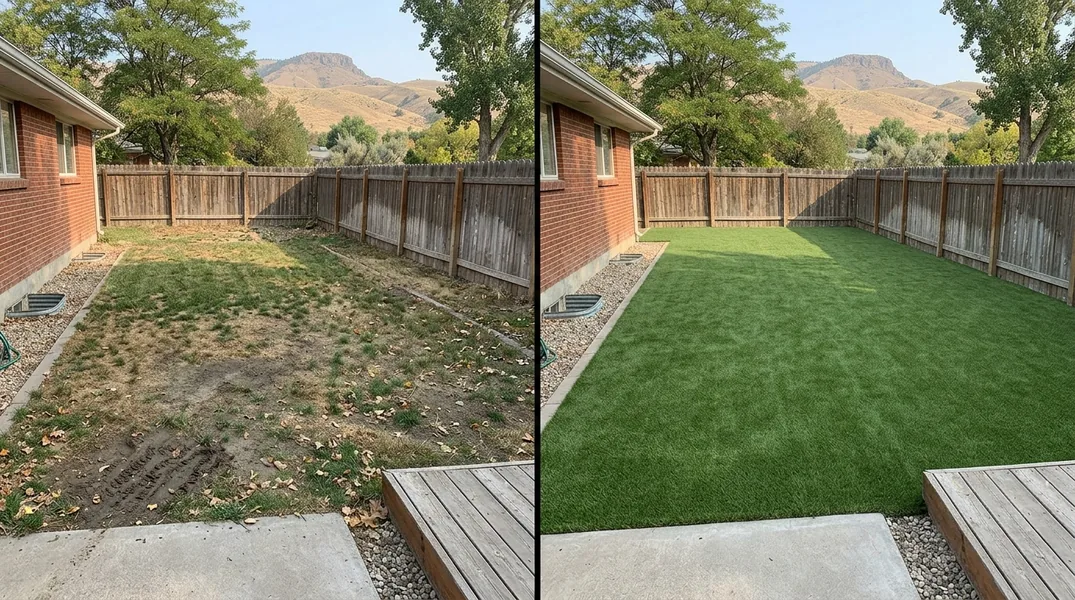
Why Backyard Putting Greens Are Growing in Popularity
A backyard putting green has become one of the most sought-after outdoor amenities for homeowners in Boise and across the country. Unlike traditional landscaping projects that require constant maintenance, a modern putting green offers year-round enjoyment with minimal upkeep. Whether you're an avid golfer looking to sharpen your short game or simply want to add a unique recreational feature to your property, a putting green delivers both entertainment value and a subtle boost to your home's overall appeal.
The shift toward backyard putting greens has been fueled by advances in artificial turf technology. Today's Putting Green Installation systems use specialized putting green turf that mimics the feel and performance of championship-level greens. This means you're not settling for a novelty feature, you're investing in a genuine practice tool that can help lower your handicap without leaving home. For families, it's also a fun gathering point that encourages outdoor time and friendly competition.
Understanding Putting Green Turf and True Roll Technology
Not all artificial grass is created equal, and putting green turf is a specialized category unto itself. Standard Residential Artificial Grass Installation turf is designed for durability and aesthetics, but putting green turf must meet much stricter performance standards. The fibers are finer, denser, and engineered to provide a consistent roll that matches the behavior of natural bent grass greens found on golf courses. This precision is what separates a fun backyard feature from a legitimate practice tool.
True roll refers to the predictable, consistent movement of a golf ball across the green surface. Achieving true roll requires several technical elements working in concert. The turf pile height is typically kept between 0.5 and 0.75 inches, much shorter than residential lawn grass. The backing system must be perfectly level and properly compacted, and the infill material (usually a combination of silica sand and rubber) needs to be evenly distributed. When these elements align correctly, your ball will roll smoothly and predictably, just as it would on a real green. This consistency is what golfers are really paying for when they invest in a quality backyard putting green.
Designing Your Backyard Putting Green: Layout and Placement Considerations
The design phase of your putting green project is where you balance your golf aspirations with practical home logistics. First, consider the size and shape of your available space. A modest 300 to 500 square foot green is ideal for most residential yards and provides enough room for multiple hole placements and varied shot distances. If you have a larger yard, you might expand to 800 square feet or more, which opens up possibilities for more complex contouring and multiple practice scenarios. The shape doesn't need to be rectangular, either. Many homeowners in Boise choose kidney shapes, freeform designs, or even tiered layouts that make better use of their unique lot dimensions.
Sunlight exposure is another critical design factor. Ideally, your putting green should receive at least six hours of direct sunlight daily, though eight to ten hours is even better. This helps keep the turf in optimal condition and prevents algae or moss growth. Drainage is equally important. Your green needs to slope gently (typically 1 to 2 percent grade) to direct water away from the playing surface and into a proper drainage system. Poor drainage can lead to standing water, which degrades the turf and compromises the true roll you've invested in. Finally, think about sight lines and accessibility. You want easy access from your patio or main living areas, and you'll want to position it where you can comfortably watch your shots from a natural vantage point.
Backyard Putting Green Cost in Boise: What to Budget
When researching pricing for a putting green installation, it's important to understand what drives the cost. A basic, smaller putting green (around 300 square feet) typically ranges from $3,500 to $6,000 installed. Mid-range greens (400 to 600 square feet) with moderate contouring and better quality turf usually fall between $6,000 and $10,000. Premium installations with larger footprints, complex slope designs, high-end putting green turf, and integrated features like bunkers or water elements can easily exceed $12,000 to $20,000 or more.
The cost breakdown generally includes the turf material itself, the base preparation and compaction, proper drainage installation, infill materials, and professional labor. In the Boise area, labor costs are moderate compared to coastal markets, which can make installation more accessible. However, the quality of the base preparation is where you should never cut corners. A poorly prepared base will compromise true roll and lead to costly repairs down the road. When you get a quote from a reputable installer, make sure it includes detailed specifications about base materials, compaction methods, drainage systems, and the grade of putting green turf being used. This transparency helps you compare apples to apples and understand where your investment is actually going.
Installation Process: What to Expect from Start to Finish
Professional putting green installation is a multi-step process that typically takes one to two weeks from start to finish, depending on site conditions and green size. The first phase involves site preparation, which means removing existing vegetation, grading the area, and establishing the proper slope. Next comes base installation, where a compacted layer of crushed stone or recycled asphalt provides a stable, well-draining foundation. This is critical because any settling or shifting in the base will throw off your true roll months or years later.
Once the base is ready, the putting green turf is carefully laid down, seamed if necessary, and secured. Then comes infill application, where a precise blend of silica sand and rubber particles is spread and worked into the turf fibers. This infill is essential for both performance and durability, it helps the ball roll true and protects the turf from UV damage and wear. Finally, the installer will brush and groom the surface, set hole cups, and make any final adjustments. A quality installer will walk you through the finished product, explain maintenance requirements, and answer all your questions. If you're considering this project for your home, reaching out to Boise Turf Installation at (208) 567-4498 is a smart first step to discuss your specific needs and get a free estimate.
Maintenance and Long-Term Care of Your Putting Green
One of the biggest advantages of an artificial putting green is how little maintenance it actually requires compared to a natural grass green. That said, some basic care is necessary to keep your investment performing at its best. Regular brushing, ideally once a month or after heavy use, helps keep the turf fibers upright and maintains consistent ball roll. You'll also want to rinse the surface occasionally to remove dust and debris, and in Boise's dry climate, a light watering during hot months can help keep the infill from drying out excessively.
Leaf debris and organic matter should be removed promptly using a leaf blower or gentle rake. Avoid using heavy equipment or sharp tools that could damage the turf. Most quality putting green installations are designed to last 15 to 20 years with proper care, and many last even longer. Unlike natural grass, you won't need to worry about seasonal dormancy, disease, or the cost of constant fertilization and pest control. If you're interested in learning more about the specific maintenance requirements for your green, or if you have questions about how a putting green fits into your overall landscape plan, don't hesitate to contact Boise Turf Installation today.
Looking for a professional artificial grass installation company in Boise? Boise Turf Installation responds fast for all your artificial grass installation needs.
Get a Free Quote